The quick answer for a dirty pocket behind wood or plants

A fish tank dead spot detritus pump is worth considering when your filter is working but debris still settles in the same low-flow corner, behind hardscape, or along the lower back of a compact aquarium. The Jebao CWP-6000L/H Aquarium Wave Maker Pump is documented as a wave maker pump, made from plastic, with a manual variable-frequency option, and the selected SKU is listed for aquariums below 0.6 m. On those facts, it is best approached as a circulation tool, not as a replacement filter or a magic cleaner.
The practical decision is whether you need targeted water movement rather than more filtration. If waste is collecting because plants, stones or bogwood interrupt the filter outlet, a wave maker can help change the flow pattern so loose detritus is less likely to sit undisturbed. If the tank is already too turbulent, your fish avoid one side, or fine substrate is easily lifted, the better first move may be repositioning existing equipment and observing the tank before adding another pump.
The compact UK tank setting where this problem usually appears
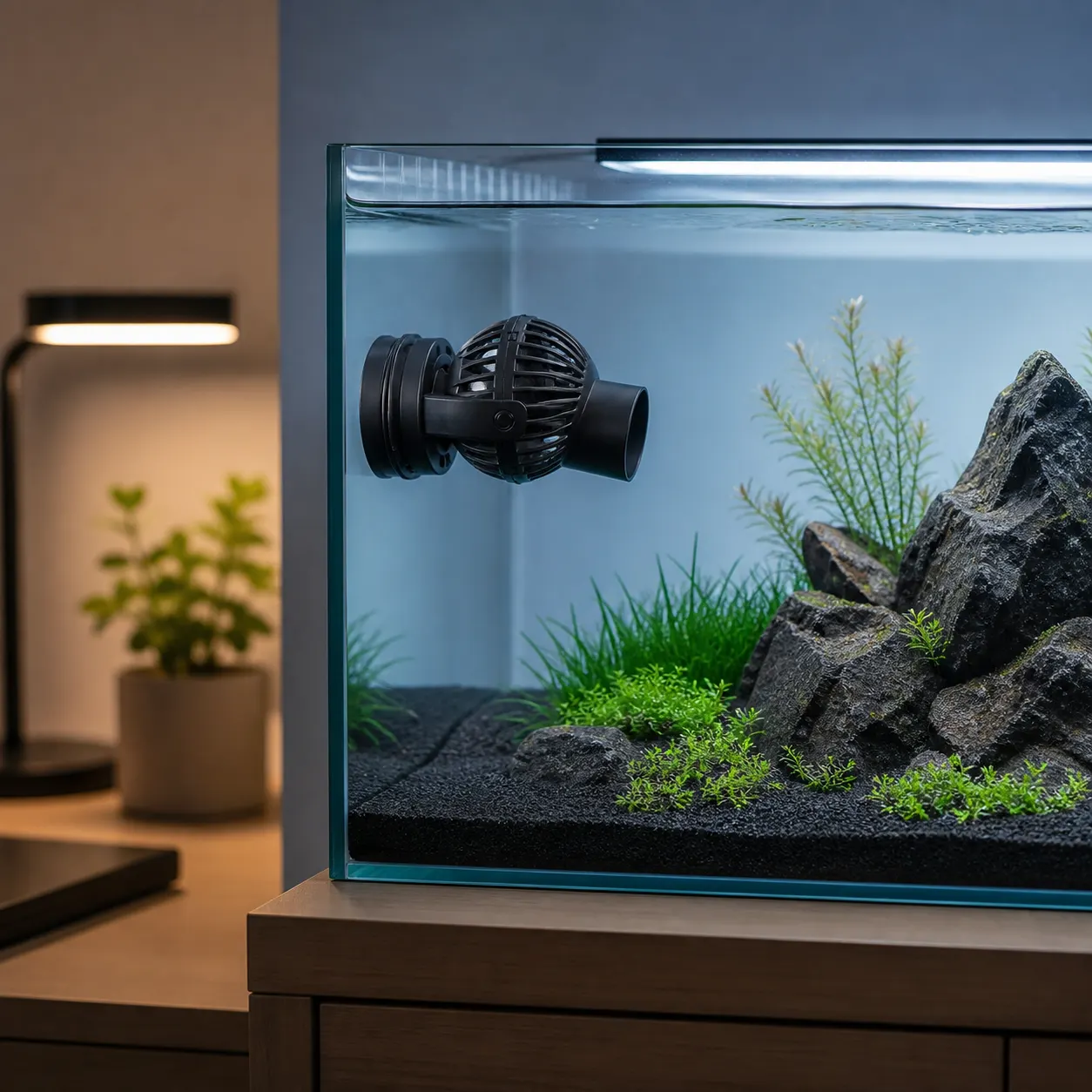
Picture a small planted aquarium on a kitchen sideboard in a Manchester flat, with the filter outlet pushing across the surface and a shaped piece of wood breaking the lower flow. The front glass looks tidy after a gravel vacuum, but a week later the same pocket of brown waste appears behind stems or around stones. That is the sort of setting where the question is not simply, ‘Do I need a bigger filter?’ It is, ‘Is water actually moving through the awkward area?’
Dead spots are often layout problems. Plants, rockwork and bogwood make a tank look natural, but they also create sheltered zones where current slows down. A filter outlet can move plenty of water near the surface while leaving the lower back corner quiet. A wave maker pump is designed for movement rather than trapping debris, so the buyer’s job is to use it to alter the route that loose waste takes, ideally nudging it back into open water where normal maintenance and filtration can deal with it.
The documented facts to check before treating it as the right pump
The fixed product facts are fairly narrow, which is useful because it keeps the decision grounded. The product is a Jebao CWP-6000L/H Aquarium Wave Maker Pump. The selected option is a manual variable-frequency configuration. The SKU is listed for aquariums below 0.6 m. The listed category is wave maker pump, and the listed material is plastic. Those facts support a circulation use case in a compact aquarium, but they do not prove suitability for every livestock mix, aquascape or flow preference.
For a UK home fishkeeper, the most important phrase is ‘below 0.6 m’. Do not treat the number in the product title as permission to place it in any small tank without judgement. Tank length, open swimming space, plant density and fish behaviour all matter. Manual variable-frequency control is helpful because it suggests the setup is not a single fixed blast, but you still need to observe the aquarium after positioning it. The product facts identify what it is; your tank decides whether it is comfortable.
Where the pump helps and where it can create a mismatch
This kind of pump makes most sense when detritus gathers because one part of the aquarium is too still. In a planted tank, that may be behind a thick clump of stems or under a piece of wood. In a smaller marine or reef-style setup, it may be around rockwork or on a patch of sand that never quite clears. The useful goal is broad circulation that changes the water pattern, not a narrow jet pointed straight at the dirty area.
The mismatch is buying flow when the problem is not flow. If the tank is overstocked, overfed or rarely cleaned, a wave maker will not remove the underlying source of waste. If fish are already struggling with current, extra movement may make the tank less comfortable. If the substrate is very light, a poorly aimed pump may move it. If the aquascape has delicate plants in the direct path, they may be disturbed. The pump should solve a specific dead spot, not become another stress point.
A placement sequence for the packing-bench style maintenance check
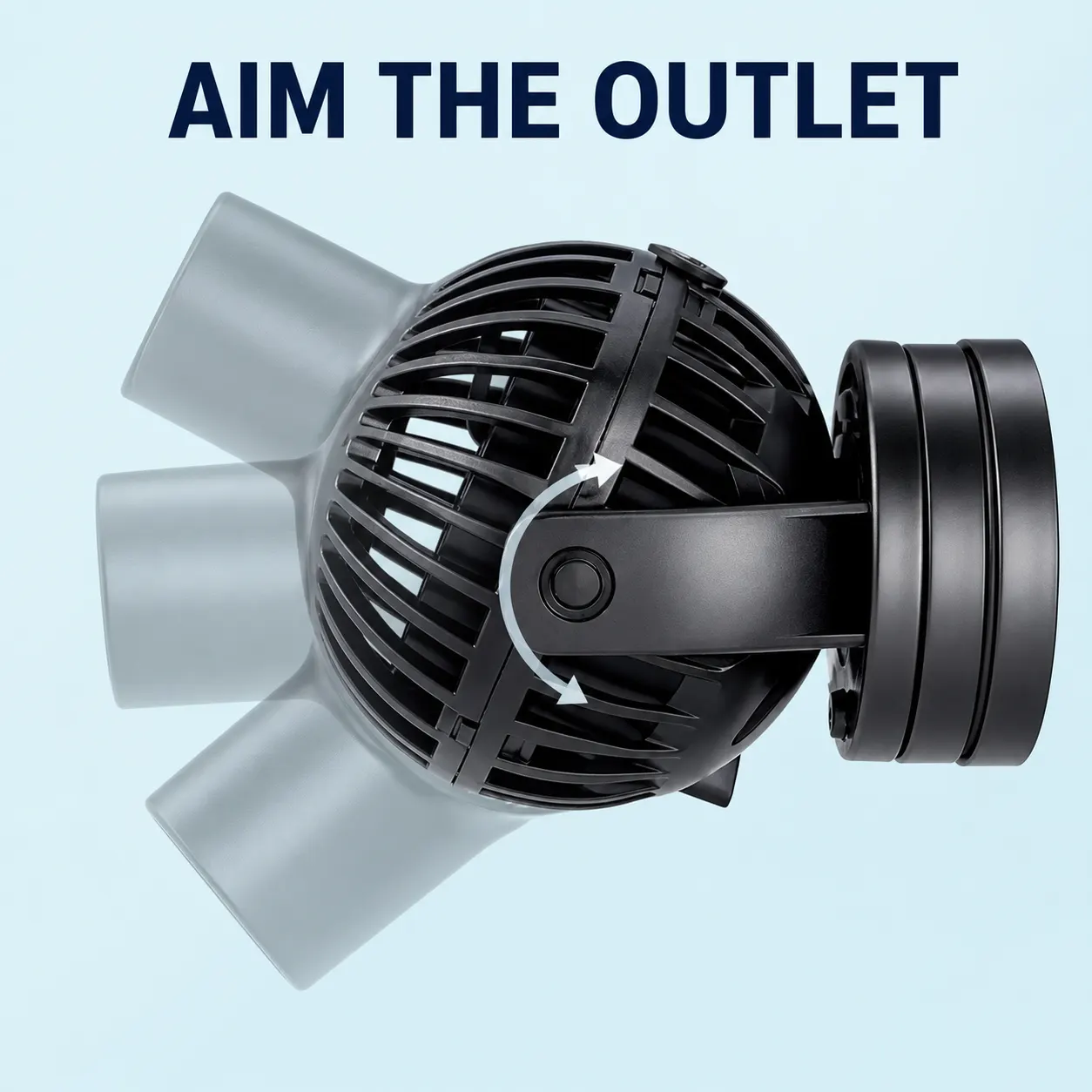
Use a simple sequence during a normal water-change session, like a careful aquatics assistant would at a packing bench before recommending equipment. First, identify the exact dirty pocket before you disturb it. Note whether it sits behind plants, wood, stones or the filter outlet’s blind side. Second, check whether the existing filter outlet can be angled differently. Third, if the dead spot remains, consider placing the wave maker so it sends movement across open water and around the obstruction rather than directly into fish resting areas.
After fitting any circulation pump, observe before deciding the job is done. Watch whether loose particles stay suspended longer, whether fish can still rest, and whether plants or substrate remain settled. Because this pump is documented as a manual variable-frequency option, use that adjustability as part of the setup process. Start with the least disruptive practical setting, then change one thing at a time: direction, position or intensity. If you change all three together, you will not know which adjustment helped or harmed the tank.
A buyer checklist using only the facts you can verify
Use this checklist before buying: the aquarium is below 0.6 m, matching the selected SKU listing; the problem is a repeated detritus pocket rather than general neglect; the tank has an obstruction such as plants, wood or stones interrupting filter outlet flow; there is room to place a plastic in-tank wave maker without dominating the layout; the buyer wants circulation, not filtration or aeration claims; and manual variable-frequency control is useful because the flow needs tuning rather than a fixed full-power approach.
Then check the limits: the pump is not documented here as a filter, so do not expect it to trap waste; no supplied product facts confirm livestock-specific suitability, so fish behaviour must guide final positioning; no kit contents are provided, so avoid assuming extra accessories; no usage steps are documented, so setup should be cautious and observational. The cleanest decision is to buy only if the known facts match the job in front of you: a compact tank, a visible low-flow area, and a need for adjustable circulation.
Who should pause before adding more water movement
A cautious community-tank owner should pause if small fish already avoid the filter side or if slower-water species spend much of their time sheltering from current. A wave maker may still be usable in some freshwater tanks, but the public facts here do not give a species-by-species safety claim. That means comfort must be judged by behaviour. Fish swimming normally, feeding normally and using the whole tank are better signs than debris movement alone.
A reef or marine keeper should also avoid treating one pump as the whole answer to rockwork dead spots. Flow patterns depend on aquascape, livestock and where the existing return flow sits. One position may clear one patch while creating a quiet area elsewhere. The pump’s documented role as a wave maker supports movement, but not a guaranteed result in every layout. If the tank contains areas that must remain calmer, the buyer needs space and patience to aim the pump around them.
The grounded next step before you choose this wave maker
Before adding the Jebao CWP-6000L/H Aquarium Wave Maker Pump to a compact tank, do one maintenance cycle with a clear test. Clean the known dirty pocket, leave the aquascape in place, then watch where particles drift during feeding or light gravel work. If they drop into the same sheltered place while the rest of the tank moves well, a circulation pump is a reasonable next tool to consider. If debris is everywhere, the issue is broader husbandry rather than one dead spot.
If the facts fit your tank, the buying case is straightforward: this is a wave maker pump, the selected SKU is listed for aquariums below 0.6 m, and the manual variable-frequency option gives you a way to tune movement after installation. Use it to improve circulation around awkward hardscape, not to replace cleaning. The right outcome is modest and practical: fewer settled pockets, a flow pattern that makes maintenance less frustrating, and fish that still have calm places to behave normally.